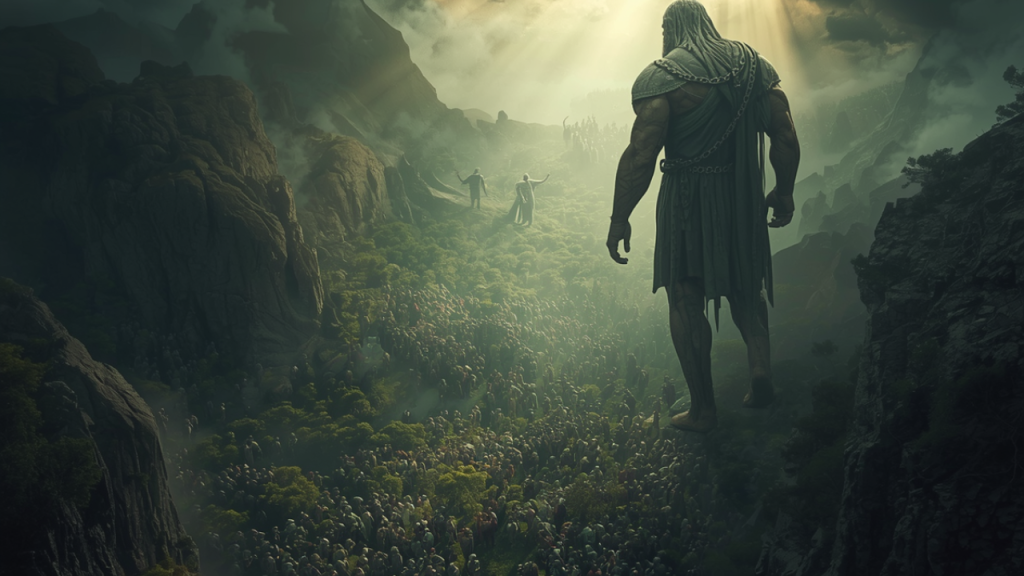
Genesis 6:1–2
“And it came to pass, when men began to multiply on the face of the earth, and daughters were born unto them,
That the sons of God saw the daughters of men that they were fair; and they took them wives of all which they chose.” (KJV)
Plain Meaning
As mankind multiplied on the earth, daughters were born among them. The sons of God saw that the daughters of men were beautiful, and they took wives from whomever they chose. The passage shows a growing problem in mankind: desire, choice, and marriage are being driven by sight and appetite instead of submission to God.
Toolbox Notes
- Clause Map: Men (who) → began to multiply (what happened) → on the face of the earth (where). Daughters (who) → were born unto them (what happened). The sons of God (who) → saw the daughters of men (what they noticed) → that they were fair (what they saw about them). They (who) → took them wives (what they did) → of all which they chose (how they chose).
- Key Word – “Men” (ʾāḏām): mankind, humanity, man descended from Adam.
- Key Word – “Multiply” (rāḇaḥ / rāḇâ): to become many, increase, grow numerous.
- Key Word – “Daughters” (bānôṯ): female children, daughters, women.
- Key Phrase – “Sons of God”: A debated phrase; understood by many as either angelic beings, rulers, or the godly line of Seth.
- Key Phrase – “Daughters of men”: Women from mankind, possibly emphasizing the wider human population.
- Key Word – “Saw” (rāʾâ): to see, look at, consider, perceive.
- Key Word – “Fair” (ṭôḇ): good, beautiful, pleasing, desirable.
- Key Word – “Took” (lāqaḥ): to take, receive, acquire, bring to oneself.
- Key Word – “Wives” (nāšîm): women, wives.
- Key Phrase – “Of all which they chose”: Their choices were driven by desire and self-will.
Digging Deeper
- The chapter begins with mankind multiplying, but multiplication does not mean mankind is becoming more righteous.
- Growth in population is now joined with growth in corruption.
- The phrase “sons of God” has been understood in several ways, so this passage must be handled carefully.
- Whatever view is taken, the main point is clear: sinful desire is spreading through relationships and marriage.
- The wording “saw,” “fair,” and “took” sounds similar to the pattern of temptation in Genesis 3:6.
- They judged by sight, desired what looked pleasing, and took what they wanted.
- Marriage, which God designed as holy, is now being shaped by lust, power, and self-choice.
- This prepares the reader for the moral collapse that leads toward the flood.
Doctrine in Work Boots
- Mankind can multiply while still growing in corruption.
- Outward growth is not the same as spiritual health.
- Sin affects desire, marriage, and family lines.
- What looks fair to the eyes may still be wrong before God.
- Human choice must be submitted to God’s will.
- The fall continues to spread through every part of human life.
Battle Station (Objection & Answer)
Objection: “Who exactly are the sons of God in this passage?”
Answer:
- Faithful Bible readers have held different views: angelic beings, powerful rulers, or the line of Seth.
- The passage does not give every detail, so we should not be reckless or dogmatic beyond the text.
- The main point is still plain: these unions were part of mankind’s growing corruption before the flood.
- The focus is not curiosity about the mystery, but the warning that desire and power were being used outside God’s order.
Life on the Job
- Exhortation (Do this): Submit your desires and relationship choices to God, not just to what looks good in the moment.
- Comfort (Trust this): God sees the corruption of the world clearly, even when mankind calls it normal.
- Warning (Avoid this): Do not use beauty, desire, or personal choice as excuses to ignore God’s order.
Speak It Back (60-sec Summary)
“When mankind began multiplying on the earth, daughters were born, and the sons of God saw that the daughters of men were fair. They took wives from all whom they chose. Genesis 6:1–2 shows mankind increasing in number, but also increasing in corruption. Desire, sight, and self-will are beginning to shape marriage and relationships in a way that prepares the world for judgment.”
Prayer Line
“Lord, teach me to submit my desires, choices, and relationships to Your order instead of being ruled by what looks good to my eyes.”
Memory & Drill (Flashcards)
- Q: What began to happen when men multiplied on the earth?
A: Daughters were born unto them. - Q: Who saw the daughters of men?
A: The sons of God. - Q: What did the sons of God see about the daughters of men?
A: That they were fair. - Q: What did they do after seeing them?
A: They took them wives. - Q: How did they choose wives?
A: Of all which they chose. - Q: What earlier temptation pattern does this echo?
A: Seeing, desiring, and taking, like Genesis 3:6. - Q: What doctrine does this passage teach?
A: Sin affects desire, marriage, and human choice. - Q: What practical warning flows from this passage?
A: Do not let sight and desire rule over God’s order.
Genesis 6:3
“And the LORD said, My spirit shall not always strive with man, for that he also is flesh: yet his days shall be an hundred and twenty years.” (KJV)
Plain Meaning
The LORD declares that His Spirit will not always strive with man. Mankind has become corrupt and fleshly, and God will not allow this rebellion to continue forever. Yet God gives a set period of time — one hundred and twenty years — showing both judgment and patience before the flood comes.
Toolbox Notes
- Clause Map: The LORD (who) → said (what He did) → My spirit shall not always strive with man (what He declared) → for that he also is flesh (why). His days (what God limited) → shall be an hundred and twenty years (the time given).
- Key Word – “LORD” (YHWH): the covenant name of God, the self-existent and faithful God.
- Key Word – “Spirit” (rûaḥ): spirit, breath, wind; here referring to God’s Spirit.
- Key Word – “Strive” (dîn): to judge, contend, plead, govern, or struggle with.
- Key Word – “Man” (ʾāḏām): mankind, humanity, descendants of Adam.
- Key Word – “Flesh” (bāśār): flesh, body, mortal humanity, frail and sinful mankind.
- Key Phrase – “Shall not always strive”: God will not continue contending with man’s rebellion forever.
- Key Phrase – “He also is flesh”: Man is weak, corrupt, and mortal.
- Key Phrase – “An hundred and twenty years”: A limited period before judgment, showing God’s patience before the flood.
Digging Deeper
- God is patient, but His patience has a limit.
- Mankind’s corruption has reached a point where God announces coming judgment.
- The phrase “My spirit shall not always strive with man” shows that God had been dealing with mankind, not ignoring them.
- Man is called flesh, showing weakness, mortality, and corruption.
- The one hundred and twenty years likely points to the period of mercy before the flood judgment comes.
- God does not rush into judgment, but neither does He leave sin unanswered forever.
- This verse teaches that delayed judgment is not canceled judgment.
Doctrine in Work Boots
- God’s Spirit contends with sinful man.
- God is patient, but His patience is not endless toward rebellion.
- Man is flesh: weak, mortal, and corrupted by sin.
- Judgment delayed is not judgment denied.
- God gives warning before bringing destruction.
- Mercy can be seen even in the countdown before judgment.
Battle Station (Objection & Answer)
Objection: “If God is merciful, why would He limit man’s time before judgment?”
Answer:
- God’s mercy is shown in giving warning and time before judgment falls.
- Mankind’s corruption was real and spreading.
- God is not only merciful; He is also holy and just.
- The one hundred and twenty years shows patience, not cruelty.
- God does not owe sinners endless time to continue rebellion.
Life on the Job
- Exhortation (Do this): Respond to God while He is striving with you, not after your heart has grown harder.
- Comfort (Trust this): God is patient and gives warning before judgment.
- Warning (Avoid this): Do not mistake God’s delay for permission to keep sinning.
Speak It Back (60-sec Summary)
“The LORD said His Spirit would not always strive with man, because man is flesh. Yet man’s days would be one hundred and twenty years. Genesis 6:3 shows that God had been patiently dealing with sinful mankind, but He would not allow rebellion to continue forever. Judgment was coming, but even the delay showed mercy and warning.”
Prayer Line
“Lord, help me respond while You are dealing with my heart, and keep me from abusing Your patience.”
Memory & Drill (Flashcards)
- Q: What did the LORD say would not always strive with man?
A: His Spirit. - Q: Why would God’s Spirit not always strive with man?
A: Because man also is flesh. - Q: What does “flesh” point to here?
A: Man’s weakness, mortality, and corruption. - Q: How long were man’s days set at?
A: One hundred and twenty years. - Q: What does this time period show?
A: God’s patience before judgment. - Q: What doctrine does this passage teach?
A: God is patient, but His patience toward rebellion has a limit. - Q: What practical warning flows from this passage?
A: Do not mistake delayed judgment for permission to continue in sin.
Genesis 6:4
“There were giants in the earth in those days; and also after that, when the sons of God came unto the daughters of men, and they bare children to them, the same became mighty men which were of old, men of renown.” (KJV)
Plain Meaning
Genesis says there were giants in the earth in those days, and also afterward. When the sons of God came unto the daughters of men, children were born to them. These children became mighty men of old, men of renown. The verse describes a time of unusual strength, fame, and corruption before the flood.
Toolbox Notes
- Clause Map: There were giants (who was present) → in the earth (where) → in those days (when). The sons of God (who) → came in unto the daughters of men (what they did) → and they bare children to them (what came from it). The same (who they became known as) → became mighty men (what they were) → men of old, men of renown (how they were remembered).
- Key Word – “Giants” (Nephilim): mighty ones, fallen ones, giants; a debated term connected with unusual strength and fearful reputation.
- Key Phrase – “In those days”: The time before the flood, when corruption was increasing.
- Key Phrase – “Also after that”: Giants or mighty men are mentioned again after this period.
- Key Phrase – “Sons of God”: A debated phrase; understood by many as angelic beings, rulers, or the line of Seth.
- Key Phrase – “Daughters of men”: Women from mankind, connected to the unions described in Genesis 6:1–2.
- Key Word – “Bare” (yālaḏ): to bear, bring forth, give birth.
- Key Word – “Mighty men” (gibbōrîm): strong men, warriors, powerful ones, heroes.
- Key Phrase – “Of old”: From ancient times, remembered from earlier days.
- Key Word – “Renown” (šēm): name, fame, reputation, known identity.
Digging Deeper
- This verse is one of the most debated verses in Genesis, so it should be handled carefully.
- The main point is clear even if every detail is not: mankind is becoming powerful, famous, violent, and corrupt.
- The “giants” or Nephilim are connected with fear, strength, and ancient reputation.
- The phrase “mighty men” can sound impressive, but might does not equal righteousness.
- “Men of renown” means they had a name, fame, and reputation among men.
- Genesis is showing a world impressed with strength and reputation while God sees deep corruption.
- This verse prepares the reader for God’s judgment by showing that human greatness had not produced holiness.
Doctrine in Work Boots
- Human strength does not equal spiritual righteousness.
- Fame before men does not mean approval before God.
- A world can admire mighty men while God sees corruption.
- Sin can grow alongside power, reputation, and cultural memory.
- God is not impressed by human renown when the heart is wicked.
- Mankind’s greatness cannot save it from God’s judgment.
Battle Station (Objection & Answer)
Objection: “Who exactly were the giants or Nephilim?”
Answer:
- The term is debated, and faithful readers have understood it in different ways.
- Some connect them to unusual offspring from Genesis 6:1–2, while others see them as powerful warriors or tyrants.
- The verse clearly presents them as mighty men and men of renown.
- The main warning is not to chase mystery, but to see that human power and fame were rising in a corrupt world before judgment.
Life on the Job
- Exhortation (Do this): Measure men by faithfulness to God, not by strength, fame, influence, or reputation.
- Comfort (Trust this): God sees the truth behind every famous name and powerful man.
- Warning (Avoid this): Do not confuse being known by men with being approved by God.
Speak It Back (60-sec Summary)
“There were giants in the earth in those days, and also afterward. When the sons of God came unto the daughters of men, children were born who became mighty men of old, men of renown. Genesis 6:4 shows a world impressed with strength, fame, and mighty men, but this greatness did not mean righteousness. Human renown cannot hide corruption from God.”
Prayer Line
“Lord, keep me from chasing strength, fame, or a great name while neglecting righteousness before You.”
Memory & Drill (Flashcards)
- Q: What were in the earth in those days?
A: Giants. - Q: What Hebrew term is often connected with “giants”?
A: Nephilim. - Q: Who came unto the daughters of men?
A: The sons of God. - Q: What were the children called?
A: Mighty men which were of old. - Q: What does “men of renown” mean?
A: Men of name, fame, or reputation. - Q: Does human strength equal righteousness?
A: No. - Q: What doctrine does this passage teach?
A: Human power and fame cannot hide corruption from God. - Q: What practical warning flows from this passage?
A: Do not confuse being known by men with being approved by God.
Genesis 6:5
“And GOD saw that the wickedness of man was great in the earth, and that every imagination of the thoughts of his heart was only evil continually.” (KJV)
Plain Meaning
God looks upon mankind and sees that man’s wickedness has become great in the earth. The corruption is not small, occasional, or only outward. Man’s inner life is ruined too. Every imagination of the thoughts of his heart is only evil continually.
Toolbox Notes
- Clause Map: GOD (who) → saw (what He did) → the wickedness of man was great in the earth (what He saw outwardly) → and every imagination of the thoughts of his heart was only evil continually (what He saw inwardly).
- Key Word – “GOD” (YHWH): the covenant name of God, the self-existent LORD who sees and judges rightly.
- Key Word – “Saw” (rāʾâ): to see, look upon, perceive, inspect, understand.
- Key Word – “Wickedness” (raʿâ): evil, badness, moral corruption, wicked conduct.
- Key Word – “Great” (rab): much, many, abundant, multiplied.
- Key Word – “Imagination” (yēṣer): forming, frame, purpose, inclination, devised thought.
- Key Word – “Thoughts” (maḥăšāḇâ): thoughts, plans, devices, intentions.
- Key Word – “Heart” (lēḇ): inner man, mind, will, desire, understanding.
- Key Word – “Evil” (raʿ): evil, wicked, harmful, morally wrong.
- Key Phrase – “Wickedness of man was great”: Sin had grown widespread and heavy in the earth.
- Key Phrase – “Every imagination”: The corruption reached man’s inner planning and desires.
- Key Phrase – “Only evil continually”: The verse describes deep, constant, inward corruption.
Digging Deeper
- God does not judge the world blindly; He sees the true condition of man.
- The problem before the flood was not only violence outside, but corruption inside the heart.
- Man’s wickedness had become great in the earth, meaning sin was spreading and multiplying.
- The heart is shown as the source of evil thoughts, plans, and desires.
- “Only evil continually” shows how deep mankind’s corruption had become.
- Human civilization had grown in skill, fame, music, tools, and cities, but the heart had grown evil.
- This verse prepares the reader for why the flood judgment comes.
Doctrine in Work Boots
- God sees both outward wickedness and inward corruption.
- Sin begins in the heart before it shows itself in the world.
- Mankind’s problem is not merely bad behavior, but a fallen heart.
- Human progress cannot cure inward evil.
- God’s judgment is based on true knowledge of man’s condition.
- Continual evil shows the depth of man’s need for grace.
Battle Station (Objection & Answer)
Objection: “Was mankind really that bad, or is this just strong language?”
Answer:
- The verse says God saw the wickedness of man Himself.
- God’s judgment is not exaggeration; He sees the heart perfectly.
- The corruption was both outward, in the earth, and inward, in man’s thoughts.
- The flood judgment that follows shows the seriousness of this condition.
Life on the Job
- Exhortation (Do this): Ask God to search not only your actions, but your thoughts, desires, and motives.
- Comfort (Trust this): God sees the full depth of human evil and is still able to save by grace.
- Warning (Avoid this): Do not measure sin only by outward actions while ignoring the heart.
Speak It Back (60-sec Summary)
“God saw that the wickedness of man was great in the earth. But He also saw deeper than outward actions: every imagination of the thoughts of man’s heart was only evil continually. Genesis 6:5 shows that before the flood, mankind’s corruption was not only in behavior, but in the heart. God’s judgment comes because He sees man truly.”
Prayer Line
“Lord, search my heart, cleanse my thoughts, and save me from evil that begins inside before it comes out.”
Memory & Drill (Flashcards)
- Q: Who saw the wickedness of man?
A: GOD. - Q: What did God see about man’s wickedness?
A: It was great in the earth. - Q: What part of man did God look deeper into?
A: His heart. - Q: What was every imagination of man’s thoughts like?
A: Only evil continually. - Q: What does “heart” point to in this verse?
A: The inner man: thoughts, desires, will, and motives. - Q: What doctrine does this passage teach?
A: God sees both outward wickedness and inward corruption. - Q: What practical warning flows from this passage?
A: Do not measure sin only by outward actions while ignoring the heart.
Genesis 6:6
“And it repented the LORD that he had made man on the earth, and it grieved him at his heart.” (KJV)
Plain Meaning
The LORD is grieved over mankind’s corruption. This does not mean God made a mistake or learned something new. It means man’s wickedness brought real sorrow before God. The same mankind God made on the earth had become deeply corrupt, and it grieved Him at His heart.
Toolbox Notes
- Clause Map: The LORD (who) → repented (how He responded) → that He had made man on the earth (what grieved Him) → and it grieved Him at His heart (how deeply He was affected).
- Key Word – “Repented” (nāḥam): to be grieved, moved with sorrow, relent, be deeply affected.
- Key Word – “LORD” (YHWH): the covenant name of God, the self-existent and faithful God.
- Key Word – “Made” (ʿāśâ): to make, do, fashion, prepare.
- Key Word – “Grieved” (ʿāṣaḇ): to hurt, pain, grieve, wound with sorrow.
- Key Word – “Heart” (lēḇ): inner being, mind, will, affection, inward life.
- Key Phrase – “It repented the LORD”: God is deeply grieved by man’s wickedness, not surprised or mistaken.
- Key Phrase – “That he had made man”: The grief is tied to mankind’s corruption after being created by God.
- Key Phrase – “Grieved him at his heart”: God’s sorrow over sin is real and deeply personal.
Digging Deeper
- This verse shows that God is not cold or careless toward human sin.
- God’s grief does not mean He sinned, failed, or made a mistake.
- The language helps us understand God’s holy sorrow over man’s corruption.
- Sin does not only break rules; it grieves the heart of God.
- The same God who saw creation as very good now sees mankind filled with evil.
- God’s coming judgment is not emotional rage, but holy grief joined with perfect justice.
- This verse makes the flood account serious: judgment comes from a God who sees, grieves, and judges rightly.
Doctrine in Work Boots
- God is personally grieved by human sin.
- God’s grief does not mean God made a mistake.
- Sin is not small; it wounds fellowship and provokes holy sorrow.
- God’s judgment flows from perfect holiness, not cruelty.
- The heart of God is not indifferent toward wickedness.
- Man’s corruption is serious because man was made by God for God.
Battle Station (Objection & Answer)
Objection: “Does this mean God regretted creating man because He did not know what would happen?”
Answer:
- No, God is all-knowing and was not surprised by man’s sin.
- The word shows God’s grief and sorrow over human wickedness.
- God is speaking in a way man can understand, showing the seriousness of sin.
- The verse does not teach that God made a mistake; it teaches that man’s corruption grieved Him deeply.
Life on the Job
- Exhortation (Do this): Treat sin seriously because it grieves the heart of God.
- Comfort (Trust this): God is not distant or cold; He cares deeply about what happens in His creation.
- Warning (Avoid this): Do not think God’s patience means He is unaffected by wickedness.
Speak It Back (60-sec Summary)
“The LORD repented that He had made man on the earth, and it grieved Him at His heart. This does not mean God made a mistake or was surprised. It means mankind’s wickedness brought real grief before God. Genesis 6:6 shows that sin grieves the heart of God, and that His coming judgment is holy, serious, and righteous.”
Prayer Line
“Lord, help me hate the sin that grieves Your heart, and make me tender before Your holiness.”
Memory & Drill (Flashcards)
- Q: What did it repent the LORD about?
A: That He had made man on the earth. - Q: Did this mean God made a mistake?
A: No. - Q: What does “repented” show here?
A: God’s grief and sorrow over man’s wickedness. - Q: Where was God grieved?
A: At His heart. - Q: What does this verse show about sin?
A: Sin grieves the heart of God. - Q: What doctrine does this passage teach?
A: God is personally grieved by human sin. - Q: What practical warning flows from this passage?
A: Do not treat sin lightly, because it grieves God deeply.
Genesis 6:7–8
“And the LORD said, I will destroy man whom I have created from the face of the earth; both man, and beast, and the creeping thing, and the fowls of the air; for it repenteth me that I have made them.
But Noah found grace in the eyes of the LORD.” (KJV)
Plain Meaning
The LORD declares that He will destroy man from the face of the earth because of mankind’s corruption. The judgment will also affect the beasts, creeping things, and fowls of the air. But in the middle of this dark judgment, Noah finds grace in the eyes of the LORD. The world is under judgment, but God still shows mercy.
Toolbox Notes
- Clause Map: The LORD (who) → said (what He did) → I will destroy man (what He will do) → whom I have created (who man is before God) → from the face of the earth (where judgment will fall) → both man, beast, creeping thing, and fowls (who/what will be affected) → for it repenteth me that I have made them (why judgment is coming) → but Noah found grace (mercy in the middle of judgment) → in the eyes of the LORD (where grace was found).
- Key Word – “Destroy” (māḥâ): to wipe out, blot out, erase, destroy.
- Key Word – “Face of the earth” (pānîm ʾăḏāmâ): the surface of the ground or land.
- Key Word – “Beast” (bĕhēmâ): animals, livestock, land creatures.
- Key Word – “Creeping thing” (remeś): small moving creatures that creep or crawl.
- Key Word – “Fowls” (ʿôp̄): birds, flying creatures.
- Key Word – “Repenteth” (nāḥam): to be grieved, moved with sorrow, deeply affected.
- Key Word – “Grace” (ḥēn): favor, kindness, acceptance, gracious regard.
- Key Phrase – “I will destroy man”: God announces serious judgment upon corrupt mankind.
- Key Phrase – “Whom I have created”: The Creator has the right to judge His creation.
- Key Phrase – “Both man, and beast”: Man’s sin brings consequences that touch creation.
- Key Phrase – “But Noah”: A sharp turn from judgment to mercy.
- Key Phrase – “Found grace”: Noah is not presented first as earning salvation, but as receiving favor from God.
Digging Deeper
- God’s judgment is not random; it comes after He sees man’s wickedness and is grieved by it.
- The flood judgment will touch more than mankind because man’s sin affects the created world around him.
- The words “I have created” remind us that God is not judging something that belongs to another; all creation is His.
- “But Noah” is one of the great mercy turns in Genesis.
- In a world filled with evil, God still sees one man and shows grace.
- Noah finding grace does not mean Noah was sinless; it means God showed him favor.
- Judgment is real, but grace is already standing in the text before the flood begins.
Doctrine in Work Boots
- God has the right to judge the world He created.
- Sin brings consequences beyond the sinner alone.
- God’s judgment is holy, not careless or cruel.
- Grace appears in the middle of judgment.
- Noah’s hope begins with God’s favor, not man’s strength.
- Even when the world is corrupt, God can preserve a man by grace.
Battle Station (Objection & Answer)
Objection: “Was God being too harsh by destroying man and the creatures?”
Answer:
- Genesis has already shown that mankind’s wickedness was great in the earth.
- Every imagination of man’s heart was only evil continually.
- The Creator has the right to judge His creation when it becomes corrupt.
- God’s grief shows this judgment was not cold cruelty.
- Noah finding grace shows that God’s mercy was still present even in judgment.
Life on the Job
- Exhortation (Do this): Take God’s judgment seriously and flee to His grace.
- Comfort (Trust this): Even when judgment is deserved, God is able to show grace.
- Warning (Avoid this): Do not assume a corrupt world can continue forever without God answering it.
Speak It Back (60-sec Summary)
“The LORD said He would destroy man from the face of the earth, along with beasts, creeping things, and fowls, because He was grieved that He had made them. But Noah found grace in the eyes of the LORD. Genesis 6:7–8 shows both judgment and mercy: God judges corruption, but He also gives grace in the middle of a condemned world.”
Prayer Line
“Lord, help me fear Your judgment rightly and cling to the grace that comes from You alone.”
Memory & Drill (Flashcards)
- Q: What did the LORD say He would do to man?
A: Destroy man from the face of the earth. - Q: Who else would be affected by the judgment?
A: Beasts, creeping things, and fowls of the air. - Q: Why did God pronounce this judgment?
A: Because He was grieved that He had made them. - Q: What phrase turns the passage from judgment to mercy?
A: “But Noah.” - Q: What did Noah find?
A: Grace. - Q: Where did Noah find grace?
A: In the eyes of the LORD. - Q: What doctrine does this passage teach?
A: God judges corruption, but gives grace in the middle of judgment. - Q: What practical comfort flows from this passage?
A: Even in a corrupt world, God can preserve a man by grace.
Genesis 6:9–10
“These are the generations of Noah: Noah was a just man and perfect in his generations, and Noah walked with God.
And Noah begat three sons, Shem, Ham, and Japheth.” (KJV)
Plain Meaning
Genesis now begins the record of Noah. In a corrupt world, Noah is described as a just man, perfect in his generations, and one who walked with God. He also has three sons: Shem, Ham, and Japheth. Noah stands out from his generation because he lives before God while the world around him is filled with wickedness.
Toolbox Notes
- Clause Map: These (what this section is) → are the generations of Noah (whose record begins) → Noah (who) → was a just man (what kind of man he was) → and perfect in his generations (how he stood among his people) → and walked with God (how he lived before God) → Noah (who) → begat three sons (what he did) → Shem, Ham, and Japheth (who his sons were).
- Key Word – “Generations” (tôlĕḏôṯ): generations, descendants, family record, account of what came forth.
- Key Word – “Noah” (Nōaḥ): rest, comfort, relief.
- Key Word – “Just” (ṣaddîq): righteous, upright, lawful, right before God.
- Key Word – “Perfect” (tāmîm): whole, complete, blameless, sound, without defect in conduct.
- Key Word – “Generations” (dôr): generation, age, period, people living at the same time.
- Key Word – “Walked” (hālak): to walk, go, live, conduct oneself.
- Key Phrase – “A just man”: Noah is marked by righteousness in an unrighteous world.
- Key Phrase – “Perfect in his generations”: Noah’s life was blameless and whole among the people of his time.
- Key Phrase – “Walked with God”: Noah lived in fellowship, obedience, and steady faith before God.
- Key Phrase – “Three sons”: Noah’s family is introduced because they will be preserved through the flood.
Digging Deeper
- Genesis 6:8 says Noah found grace, and Genesis 6:9 shows the kind of life grace marked in him.
- Noah was not called just because the world was good; he was just while the world was corrupt.
- “Perfect” does not mean Noah was sinless; it means he was blameless and whole in his walk before God.
- Noah’s righteousness was not private talk only; his life stood out in his generation.
- The phrase “walked with God” connects Noah with Enoch.
- In a world full of violence and evil thoughts, Noah’s life moved in fellowship with God.
- Noah’s sons are named because God will preserve mankind through Noah’s household.
Doctrine in Work Boots
- Grace produces a life that is different from the world.
- A man can walk with God even in a corrupt generation.
- Righteousness before God matters more than fitting into the age.
- Blameless does not mean sinless; it means whole and upright before God.
- God preserves His purpose through families and generations.
- Noah’s life shows that one faithful man can stand out in a wicked world.
Battle Station (Objection & Answer)
Objection: “Does this mean Noah earned salvation because he was just and perfect?”
Answer:
- Genesis 6:8 comes first: Noah found grace in the eyes of the LORD.
- Noah’s righteous life flowed from God’s grace, not from sinless perfection.
- The words “just” and “perfect” describe Noah’s walk, not a claim that he had no sin at all.
- God saved Noah by grace, and Noah’s life showed faith and obedience in that grace.
Life on the Job
- Exhortation (Do this): Walk with God even if the whole generation around you walks another way.
- Comfort (Trust this): God sees the man who stands for Him in a corrupt world.
- Warning (Avoid this): Do not use the wickedness of your generation as an excuse to stop obeying God.
Speak It Back (60-sec Summary)
“These are the generations of Noah. Noah was a just man, perfect in his generations, and he walked with God. He also had three sons: Shem, Ham, and Japheth. Genesis 6:9–10 shows that Noah stood out in a corrupt world. He was not sinless, but he was upright, marked by grace, and walking with God while his generation moved toward judgment.”
Prayer Line
“Lord, make me a man who walks with You faithfully, even when the generation around me is corrupt.”
Memory & Drill (Flashcards)
- Q: Whose generations begin in Genesis 6:9?
A: Noah’s. - Q: What kind of man was Noah?
A: A just man. - Q: How was Noah described in his generations?
A: Perfect in his generations. - Q: Who did Noah walk with?
A: God. - Q: Does “perfect” mean Noah was sinless?
A: No. - Q: What were Noah’s three sons named?
A: Shem, Ham, and Japheth. - Q: What doctrine does this passage teach?
A: A man can walk with God even in a corrupt generation. - Q: What practical warning flows from this passage?
A: Do not use your generation’s wickedness as an excuse to disobey God.
Genesis 6:11–12
“The earth also was corrupt before God, and the earth was filled with violence.
And God looked upon the earth, and, behold, it was corrupt; for all flesh had corrupted his way upon the earth.” (KJV)
Plain Meaning
The earth was corrupt before God and filled with violence. God looked upon the earth and saw that it was corrupt, because all flesh had corrupted its way. The problem was not hidden from God. Mankind’s evil had spread through the whole earth, and violence had filled human life.
Toolbox Notes
- Clause Map: The earth (what was being described) → was corrupt (its condition) → before God (in whose sight) → and the earth (what else) → was filled with violence (what filled it) → God (who) → looked upon the earth (what He did) → and behold, it was corrupt (what He saw) → for all flesh (who was guilty) → had corrupted his way (what they had done) → upon the earth (where it happened)
- Key Word – “Corrupt” (šāḥaṯ): ruined, spoiled, destroyed, morally corrupted.
- Key Phrase – “Before God”: The corruption is seen and measured in God’s sight, not man’s opinion.
- Key Word – “Filled” (mālēʾ): full, filled up, completed, overflowing.
- Key Word – “Violence” (ḥāmās): violence, cruelty, wrong, injustice, oppression.
- Key Word – “Looked” (rāʾâ): to see, inspect, look upon, perceive.
- Key Phrase – “All flesh”: Mankind and living creatures under man’s corrupted world; the corruption is widespread.
- Key Word – “Way” (derek): road, path, manner of life, conduct.
- Key Phrase – “Corrupted his way”: Man’s lifestyle, conduct, and direction had become ruined before God.
Digging Deeper
- The earth is described as corrupt before God, meaning God’s holy sight is the standard.
- Men may have called their world normal, advanced, or powerful, but God called it corrupt.
- Violence filled the earth, showing that sin had become public, brutal, and widespread.
- The problem was not only private thoughts anymore; corruption had become a whole way of life.
- “All flesh had corrupted his way” shows that man’s path, habits, and direction were ruined.
- God looked upon the earth before judgment came, showing that His judgment was not blind or careless.
- These verses explain why the flood was righteous judgment, not random destruction.
Doctrine in Work Boots
- God sees the true condition of the earth.
- Corruption is measured before God, not by what society accepts.
- Sin ruins man’s way of life, not only isolated actions.
- Violence is a sign of deep moral decay.
- God’s judgment comes after He sees and knows the truth.
- A world can be full of people, culture, and activity while being corrupt before God.
Battle Station (Objection & Answer)
Objection: “Was the flood really necessary, or was God overreacting?”
Answer:
- The text says the earth was corrupt before God.
- The earth was filled with violence, not merely touched by a little evil.
- God looked and saw that all flesh had corrupted his way.
- The flood comes after God’s perfect inspection, not from rash anger.
- God’s judgment is righteous because He sees corruption truthfully.
Life on the Job
- Exhortation (Do this): Let God define corruption, not the culture around you.
- Comfort (Trust this): God sees violence, injustice, and corruption even when men pretend it is normal.
- Warning (Avoid this): Do not let your “way” become corrupted little by little until sin feels ordinary.
Speak It Back (60-sec Summary)
“The earth was corrupt before God and filled with violence. God looked upon the earth and saw that it was corrupt, because all flesh had corrupted his way upon the earth. Genesis 6:11–12 shows that mankind’s evil was not hidden. The world had become ruined in conduct, filled with violence, and ready for righteous judgment.”
Prayer Line
“Lord, keep my way clean before You, and do not let me call corruption normal.”
Memory & Drill (Flashcards)
- Q: What was the condition of the earth before God?
A: It was corrupt. - Q: What was the earth filled with?
A: Violence. - Q: Who looked upon the earth?
A: God. - Q: What did God see when He looked?
A: The earth was corrupt. - Q: Who had corrupted his way upon the earth?
A: All flesh. - Q: What does “way” point to?
A: A person’s path, conduct, or manner of life. - Q: What doctrine does this passage teach?
A: God sees and judges the true corruption of mankind. - Q: What practical warning flows from this passage?
A: Do not let sin become your normal way of life.
Genesis 6:13
“And God said unto Noah, The end of all flesh is come before me; for the earth is filled with violence through them; and behold, I will destroy them with the earth.” (KJV)
Plain Meaning
God speaks directly to Noah and tells him that the end of all flesh has come before Him. The earth is filled with violence because of mankind, and God announces that He will destroy them with the earth. Noah is being told why judgment is coming and what God is about to do.
Toolbox Notes
- Clause Map: God (who) → said unto Noah (what He did / who He spoke to) → the end of all flesh is come before me (what God declares) → for the earth is filled with violence through them (why judgment is coming) → I will destroy them with the earth (what God will do).
- Key Word – “God” (ʾĕlōhîm): the mighty Creator and Judge of all the earth.
- Key Word – “Noah” (Nōaḥ): rest, comfort, relief; the man who found grace in the eyes of the LORD.
- Key Word – “End” (qēṣ): end, limit, final point, conclusion.
- Key Phrase – “All flesh”: Living creatures, with mankind especially in view as the corrupting force.
- Key Phrase – “Come before me”: The matter has reached God’s presence for judgment.
- Key Word – “Filled” (mālēʾ): full, filled up, overflowing.
- Key Word – “Violence” (ḥāmās): violence, cruelty, injustice, oppression, wrong.
- Key Word – “Destroy” (šāḥaṯ): to destroy, ruin, spoil, bring to corruption.
- Key Phrase – “Through them”: The violence of the earth is tied to mankind’s corruption.
- Key Phrase – “With the earth”: The judgment will affect both mankind and the world they corrupted.
Digging Deeper
- God does not keep Noah in the dark; He tells him the reason for coming judgment.
- The phrase “the end of all flesh” shows that the time of patience has reached its limit.
- The earth was filled with violence through mankind, meaning man’s corruption had infected the world around him.
- God’s judgment is connected to what He has already seen: corruption and violence.
- The same word idea for corruption and destruction is important: mankind corrupted the earth, and now God will bring destruction upon the corrupt world.
- Noah receives warning before the flood, showing God’s grace and instruction.
- This verse begins God’s direct command that will lead to the building of the ark.
Doctrine in Work Boots
- God sets the limit on how long corruption continues.
- God’s judgment comes with reason, not randomness.
- Violence and corruption bring divine judgment.
- Man’s sin affects the world around him.
- God warns His servant before judgment falls.
- The Creator has full authority to destroy what man has corrupted.
Battle Station (Objection & Answer)
Objection: “Why would God destroy the earth along with mankind?”
Answer:
- The text says the earth was filled with violence through mankind.
- Man’s corruption had spread into the world under his care.
- God’s judgment matches the scale of the corruption.
- The Creator has the right to judge both man and the world man has ruined.
- God is not acting blindly; He has seen the violence and declared the reason.
Life on the Job
- Exhortation (Do this): Listen when God warns, because His warnings are mercy before judgment.
- Comfort (Trust this): God sees violence and corruption, and He will not let evil rule forever.
- Warning (Avoid this): Do not think God’s patience means there will never be an end to rebellion.
Speak It Back (60-sec Summary)
“God told Noah that the end of all flesh had come before Him because the earth was filled with violence through mankind. God then said He would destroy them with the earth. Genesis 6:13 shows that God’s judgment was not random. The world was corrupt and violent, and God warned Noah before the flood came.”
Prayer Line
“Lord, help me take Your warnings seriously and trust that Your judgment is always righteous.”
Memory & Drill (Flashcards)
- Q: Who did God speak to in Genesis 6:13?
A: Noah. - Q: What did God say had come before Him?
A: The end of all flesh. - Q: What was the earth filled with?
A: Violence. - Q: Through whom was the earth filled with violence?
A: Through them, meaning corrupt mankind. - Q: What did God say He would do?
A: Destroy them with the earth. - Q: Was God’s judgment random?
A: No. - Q: What doctrine does this passage teach?
A: God sets the limit on corruption and judges violence righteously. - Q: What practical warning flows from this passage?
A: Do not mistake God’s patience for endless permission to rebel.
Genesis 6:14–16
“Make thee an ark of gopher wood; rooms shalt thou make in the ark, and shalt pitch it within and without with pitch.
And this is the fashion which thou shalt make it of: The length of the ark shall be three hundred cubits, the breadth of it fifty cubits, and the height of it thirty cubits.
A window shalt thou make to the ark, and in a cubit shalt thou finish it above; and the door of the ark shalt thou set in the side thereof; with lower, second, and third stories shalt thou make it.” (KJV)
Plain Meaning
God gives Noah clear instructions to build an ark. Noah is told what kind of wood to use, how to divide it into rooms, how to seal it with pitch, and what size it must be. God also tells him to make a window, a door in the side, and three levels inside the ark. Judgment is coming, but God is also giving Noah the exact way of preservation.
Toolbox Notes
- Clause Map: God (who is speaking) → told Noah to make an ark (what Noah must do) → of gopher wood (what material to use) → with rooms inside (how to arrange it) → pitched within and without (how to seal it) → three hundred cubits long, fifty cubits wide, thirty cubits high (the size) → with a window, door, and three stories (the design details).
- Key Word – “Make” (ʿāśâ): to make, do, build, prepare.
- Key Word – “Ark” (tēḇâ): a vessel, chest, or large floating container used for preservation.
- Key Phrase – “Gopher wood”: The specific wood God commanded Noah to use; the exact type is uncertain.
- Key Word – “Rooms” (qinnîm): nests, compartments, chambers, divided spaces.
- Key Word – “Pitch” (kōp̄er): covering, coating, tar-like substance used to seal and protect.
- Key Phrase – “Within and without”: The ark was to be sealed inside and outside.
- Key Word – “Fashion” (zeh): pattern, design, manner, specific form.
- Key Word – “Cubit” (ʾammâ): an ancient measurement based roughly on the forearm from elbow to fingertip.
- Key Phrase – “Three hundred cubits… fifty cubits… thirty cubits”: God gives exact dimensions for the ark.
- Key Phrase – “A window”: An opening for light and air.
- Key Phrase – “The door… in the side”: The ark had one appointed entrance.
- Key Phrase – “Lower, second, and third stories”: The ark had three levels for order, capacity, and function.
Digging Deeper
- God does not only announce judgment; He gives a way of preservation.
- Noah is not told to invent his own plan of survival.
- The ark is built according to God’s word, not man’s imagination.
- Every detail matters: material, rooms, pitch, size, window, door, and levels.
- The pitch shows protection, sealing, and covering from the waters of judgment.
- The door shows that entrance into safety is provided by God’s design.
- The ark was not made for speed or beauty, but for preservation through judgment.
- Noah’s obedience would have required faith, labor, patience, and endurance.
Doctrine in Work Boots
- God provides a way of salvation before judgment falls.
- God’s instructions must be followed, not improved by man.
- Obedience to God often requires practical work, tools, time, and endurance.
- The ark shows preservation by God’s appointed means.
- Judgment is real, but God’s mercy gives refuge.
- Faith obeys the details of God’s Word.
Battle Station (Objection & Answer)
Objection: “Why did God give Noah so many building details?”
Answer:
- The ark had to be built according to God’s design, not Noah’s guesswork.
- The details show that God’s salvation is ordered, purposeful, and sufficient.
- Noah’s obedience was not vague; it had to take shape in real work.
- When judgment came, only God’s provided way would preserve life.
Life on the Job
- Exhortation (Do this): Obey God in the details, not only in the big ideas.
- Comfort (Trust this): When God warns of judgment, He also knows how to preserve His people.
- Warning (Avoid this): Do not try to survive God’s judgment by building your own version of the ark.
Speak It Back (60-sec Summary)
“God told Noah to make an ark of gopher wood, with rooms inside, sealed with pitch within and without. God gave the ark’s dimensions, a window, a door in the side, and three stories. Genesis 6:14–16 shows that God provided a specific way of preservation before judgment came. Noah’s job was not to invent the plan, but to obey God’s instructions.”
Prayer Line
“Lord, help me obey Your Word in the details and trust the refuge You provide.”
Memory & Drill (Flashcards)
- Q: What did God command Noah to make?
A: An ark. - Q: What kind of wood was Noah told to use?
A: Gopher wood. - Q: What was Noah told to make inside the ark?
A: Rooms. - Q: What was Noah told to cover the ark with?
A: Pitch. - Q: Where was Noah to pitch the ark?
A: Within and without. - Q: What were the ark’s dimensions?
A: Three hundred cubits long, fifty cubits wide, and thirty cubits high. - Q: Where was the door of the ark placed?
A: In the side of the ark. - Q: How many stories did the ark have?
A: Three: lower, second, and third stories. - Q: What doctrine does this passage teach?
A: God provides a specific way of preservation before judgment. - Q: What practical warning flows from this passage?
A: Do not replace God’s appointed refuge with your own plan.
Genesis 6:17
“And, behold, I, even I, do bring a flood of waters upon the earth, to destroy all flesh, wherein is the breath of life, from under heaven; and every thing that is in the earth shall die.” (KJV)
Plain Meaning
God tells Noah plainly that He Himself is bringing a flood of waters upon the earth. The purpose of the flood is judgment: to destroy all flesh that has the breath of life under heaven. Everything living on the earth will die. This is not a natural disaster outside God’s control; it is God’s direct judgment on a corrupt world.
Toolbox Notes
- Clause Map: God (who) → will bring a flood of waters (what He will do) → upon the earth (where judgment will come) → to destroy all flesh (why He brings it) → wherein is the breath of life (who will be affected) → from under heaven (how far the judgment reaches) → every thing in the earth shall die (the result).
- Key Word – “Behold” (hinnēh): look, pay attention, see what is being declared.
- Key Phrase – “I, even I”: God emphasizes that He Himself is bringing the flood.
- Key Word – “Flood” (mabbûl): flood, deluge, overwhelming waters of judgment.
- Key Word – “Waters” (mayim): waters, floodwaters, water.
- Key Word – “Destroy” (šāḥaṯ): to ruin, destroy, corrupt, bring to destruction.
- Key Phrase – “All flesh”: Living creatures under judgment, especially mankind and land-breathing life.
- Key Phrase – “Breath of life”: The living breath God gave to creatures.
- Key Phrase – “Under heaven”: The judgment is wide-reaching and comes under God’s rule.
- Key Phrase – “Shall die”: The certain result of the flood judgment.
Digging Deeper
- God speaks clearly before judgment comes.
- The flood is not described as an accident, but as God’s appointed judgment.
- The phrase “I, even I” removes any doubt that God is the One acting.
- The world had become corrupt and filled with violence, so God brings destruction upon the corrupt world.
- “Breath of life” reminds us that life belongs to God, and God has the right to judge life.
- The flood shows that sin does not stay unanswered forever.
- This verse makes the ark even more urgent: outside God’s appointed refuge, death is certain.
Doctrine in Work Boots
- God personally judges sin.
- The flood was God’s appointed judgment, not random disaster.
- Life belongs to God because He is the giver of breath.
- Sin brings death when God’s judgment falls.
- God warns before He destroys.
- Outside God’s appointed refuge, judgment is certain.
Battle Station (Objection & Answer)
Objection: “Was the flood just a natural disaster that people later called judgment?”
Answer:
- God says, “I, even I, do bring a flood of waters.”
- The text presents the flood as God’s direct action, not an accident.
- The reason has already been given: the earth was corrupt and filled with violence.
- The flood is judgment from the Creator against a world that had corrupted its way.
Life on the Job
- Exhortation (Do this): Take God’s warnings seriously before judgment arrives.
- Comfort (Trust this): God is never out of control, even when judgment shakes the whole earth.
- Warning (Avoid this): Do not treat sin lightly when God says the result is death.
Speak It Back (60-sec Summary)
“God tells Noah, ‘I, even I, do bring a flood of waters upon the earth.’ The flood will destroy all flesh with the breath of life under heaven, and everything in the earth will die. Genesis 6:17 shows that the flood is not random disaster, but God’s direct judgment on a corrupt world. Outside God’s appointed refuge, death is certain.”
Prayer Line
“Lord, help me take Your judgment seriously and flee only to the refuge You provide.”
Memory & Drill (Flashcards)
- Q: Who says He will bring the flood?
A: God. - Q: What does God say He will bring upon the earth?
A: A flood of waters. - Q: Why is God bringing the flood?
A: To destroy all flesh. - Q: What is in the flesh that will be destroyed?
A: The breath of life. - Q: Where does the judgment reach?
A: From under heaven. - Q: What will happen to every thing in the earth?
A: It shall die. - Q: What doctrine does this passage teach?
A: God personally judges sin and life belongs to Him. - Q: What practical warning flows from this passage?
A: Do not treat sin lightly when God says judgment brings death.
Genesis 6:18–22
“But with thee will I establish my covenant; and thou shalt come into the ark, thou, and thy sons, and thy wife, and thy sons’ wives with thee.
And of every living thing of all flesh, two of every sort shalt thou bring into the ark, to keep them alive with thee; they shall be male and female.
Of fowls after their kind, and of cattle after their kind, of every creeping thing of the earth after his kind, two of every sort shall come unto thee, to keep them alive.
And take thou unto thee of all food that is eaten, and thou shalt gather it to thee; and it shall be for food for thee, and for them.
Thus did Noah; according to all that God commanded him, so did he.” (KJV)
Plain Meaning
God tells Noah that He will establish His covenant with him. Noah, his wife, his sons, and his sons’ wives will enter the ark. God also commands Noah to bring living creatures into the ark, male and female, to keep them alive. Noah must gather food for his family and the animals. Then the passage ends by showing Noah’s obedience: he did all that God commanded him.
Toolbox Notes
- Clause Map: God (who) → will establish His covenant with Noah (what He promises) → Noah and his family (who will enter) → shall come into the ark (where they will be preserved) → living creatures, male and female (what else will enter) → to keep them alive (why they enter) → Noah (who obeyed) → did all that God commanded (how he responded).
- Key Word – “Covenant” (bĕrîṯ): agreement, bond, solemn promise, covenant relationship.
- Key Word – “Establish” (qûm): to raise up, confirm, set, make firm.
- Key Phrase – “Thou shalt come into the ark”: God appoints the ark as the place of safety.
- Key Phrase – “Thou, and thy sons, and thy wife”: God’s preservation includes Noah’s household.
- Key Word – “Living thing” (ḥay): living creature, that which has life.
- Key Phrase – “Two of every sort”: God preserves animal life through ordered pairs.
- Key Phrase – “Male and female”: Life is preserved according to God’s created order.
- Key Phrase – “After their kind”: Creatures are preserved according to the kinds God made.
- Key Phrase – “To keep them alive”: The ark is not only for Noah’s survival, but for preservation of life.
- Key Phrase – “Thus did Noah”: Noah’s faith is seen in obedience.
- Key Phrase – “All that God commanded”: Noah obeyed fully, not partly.
Digging Deeper
- Judgment is coming, but God speaks covenant before the flood falls.
- Noah’s hope is not merely the ark, but the God who establishes covenant with him.
- God preserves Noah’s family, showing mercy in a household.
- The animals are brought into the ark to keep them alive, showing God’s care for His creation.
- Male and female language connects back to God’s original creation order.
- Noah must gather food, showing that faith includes preparation and practical obedience.
- Noah does not argue, edit, delay, or redesign the command.
- The final verse is simple but powerful: Noah did what God commanded.
Doctrine in Work Boots
- God preserves His people by covenant mercy.
- Salvation comes by God’s appointed way, not man’s invention.
- God cares for families and living creatures.
- God preserves life even while judging corruption.
- Faith obeys God’s Word in practical details.
- Partial obedience is not the pattern of Noah; he did all that God commanded.
Battle Station (Objection & Answer)
Objection: “Was Noah saved because he built well enough and obeyed perfectly?”
Answer:
- Noah first found grace in the eyes of the LORD.
- God established the covenant and gave the way of preservation.
- Noah’s obedience showed his faith, but God’s mercy was the foundation.
- The ark saved Noah because it was God’s appointed refuge, and Noah believed God enough to obey.
Life on the Job
- Exhortation (Do this): Obey God fully, even when the work is long, detailed, and misunderstood by others.
- Comfort (Trust this): God knows how to preserve His people and provide what is needed before judgment comes.
- Warning (Avoid this): Do not call it faith if you refuse to do what God commands.
Speak It Back (60-sec Summary)
“God told Noah He would establish His covenant with him. Noah, his family, and the living creatures would come into the ark to be kept alive. Noah also had to gather food for them. Genesis 6:18–22 shows judgment, mercy, preservation, and obedience. God provided the way, and Noah did according to all that God commanded him.”
Prayer Line
“Lord, give me the kind of faith that obeys all Your commands, not just the ones that are easy.”
Memory & Drill (Flashcards)
- Q: What did God say He would establish with Noah?
A: His covenant. - Q: Who would come into the ark with Noah?
A: His sons, his wife, and his sons’ wives. - Q: What living creatures were to come into the ark?
A: Two of every sort, male and female. - Q: Why were the creatures brought into the ark?
A: To keep them alive. - Q: What was Noah commanded to gather?
A: Food. - Q: Who was the food for?
A: Noah, his family, and the animals. - Q: How did Noah respond to God’s command?
A: He did according to all that God commanded him. - Q: What doctrine does this passage teach?
A: God preserves by covenant mercy, and true faith obeys His command. - Q: What practical warning flows from this passage?
A: Do not claim faith while refusing obedience.